Uncategorized

My life in a Gas Chamber.

As a law student I am supposed to write about advocacy and policy. While I believe it to be helpful in my professional life,I also believe that my Co-founder and I created this blog for it to help debate and talk about everything that is wrong with our Indian system and society,especially when people claim it to be in the name of religion.

While I contemplated a lot before writing this article and thinking what good will my article do,I remembered the sole reason for us to come together and put together our entire act into an organisation was to stand up for the things that we believe in. 

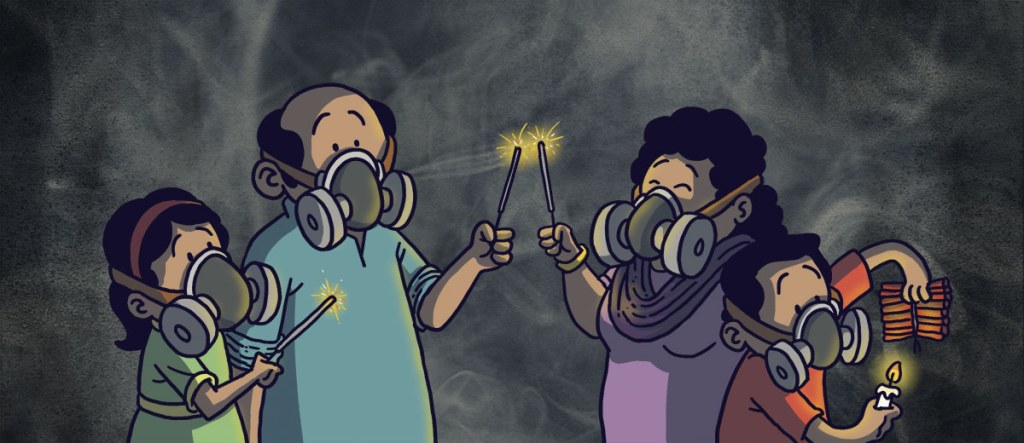
Our festivals of lights,Diwali just passed. This festival used to be my favourite festival since I was a kid but the reason why I loved it the most soon became the reason I have started to hate it. A custom of wearing new clothes,praying to our Gods and then the part I could barely wait for every time this festival arrived,the part where we burnt crackers. 

Burning crackers used to be a tradition at my house,everyone used to gather round and celebrate the festival of lights. But the reason why I adored this festival this year became the hazard that I could never fathom for it to be. 

Why is this relevant for me to write about?

This is relevant because people across the city of Delhi-NCR have come up with excuses to justify their actions. 

Everyone was and is aware that the air breathed in these four cities is deemed to be hazardous. And let me elucidate that anything above 100 appearing on your Air Quality Index that you have been checking out since Diwali to decide whether to step out of the house or to let your child play in the park is considered to be unhealthy.

The justifications that I heard for bursting some of the “green crackers” and a whole lot regular crackers were that it is a custom to burn crackers during Diwali and “oh,why do you no say anything to anyone when they burst crackers during New Years and Christmas.” 

Among others there were also some who tried to blame everything else from the public transport system to “What will happen to the manufacturers who produce these crackers?”

Lets answer these questions one by one. Firsty all those people advocating for green crackers and claiming that they cause less harm to the air apparently,are you aware how these crackers are regulated and if they are at all regulated? Let me help you,they aren’t regulated and there is no regulation which is about to be imposed either,and judging by this country’s legislation,please don’t hold your breath. 

The ones claiming that Indians burst crackers on New Years and Christmas and why don’t I put out posts blaming those people. 

Well,for me this is not shifting of blame but realising that crackers are harming our already severely polluted air and if you’re asking me to blame every American,British et cetera citizen throughout the world,have a good look because their air is not as polluted as ours. 

What stunned me the most when people were advocating this argument was how bizarre this argument was and how essentially well law students thought this argument was. This is exactly what we are taught in law school not to do. This is similar to claiming that because the other person committed a crime and got away with it that is essentially why you did it in the first place.

And even after arguing with “these” people that it was not about any other festivals or any other country doing it but about our nation and how we should not do something which would probably put our entire family at risk and worsen the air that we have no choice but to breathe,they still failed to understand anything at all. 

To the people who blamed all the stubble burning after Mister Arvind Kejriwal pleaded the farmers to stop seemed a complete way out for them.

PS:The Government also pleaded you not to burst crackers. 🙂

Let me realistically put this problem to a test by saying that that night of Diwali everyone acted like farmers burning stubble at the same time(which is unlikely because every farmer throughout every state is not likely to burn their stubble every day,hence,the pollution that they were causing over some months you caused that in a day) which caused the Air Quality Index to dip down to 600 which is downright hazardous and also made me witness my little brother having problems breathing and vomiting because of the air quality. My brother is ten years old and I am sure that half of the people who burst crackers that night were among the ones who probably have small children around the age of my brother,let me just tell you that the iota of happiness that you gave your child that night by burning crackers that night for “just their sake” is completely not worth the amount of problems that you caused him/her in the long run and it sure as hell is not your right to make other people’s children,people who were careful and considerate and who witnessed their kid having respiratory problems at a very young age. 

To everyone who says that that was just one night of fun and relaxation,you all certainly did contribute to something big,dipping the air quality index to 600 and jeopardizing the lives of everyone living in the city,making the cities of Delhi and NCR a worldwide headline for people across the Globe to never want to visit the city. 

Something funny that I had seen was the reaction of Indian people over a twitter thread of how Indian people in New Jersey had celebrated Diwali where they left tons of waste on the road. Ironically,Indians living in India were more disgraced with that while being in denial about the massacre of this polluted air that they caused and everyone is breathing today. 
Uncategorized

Privacy,a privilege?

Introduction

This article addresses the pertinent issues of data privacy laws in our country. The only data privacy or data protection laws that are in force in India are by the two acts- Information Technology Act,2000 and Information Technology (Reasonable Security Practices And Procedures And Sensitive Personal Data Or Information) Rules, 2011 which are deemed to be completely inadequate in this day and age. 

Legislation

There are two legislations which are supposed to protect the Indian population from their data being exploited and these legislations are certainly and severely backward and incompetent  especially within this age where new technology spurs the next moment almost instantaneously. 

The Government even though has started to demand biometric for essential public documents such as the Aadhar card,they fail to recognize how loosely encrypted their own websites are which can easily be exploited for the data they store.  

The Government further on has introduced a requirement to link Aadhar Cards to be linked with a person’s PAN card which again is a big massacre waiting to happen,as the PAN card is a source which holds all your sensitive data such as your bank account details

They have failed to comprehend essentially how incompetent their electronic administration system is and how miserbaly they would fail at an attempt towards digitalization unless they dont regulate the data privacy laws in this country. 

Another attempt that they seem to be experimenting on apparently for the safety and security for their own people is with varied facial recognition systems. While the companies dealing with such technology deem it to be essential and are completely ecstatic about such progress,the technology used by these companies is amateurish and does not deal with the problems at hand by providing an apt solution.

It is imperative to understand that the usage of this method does not only depend upon how effective the technology is,it is important to consider that a country which is majorly corruption ridden because of their own public authorities can only be efficaciously used if its disposal is equitable which seems to be the biggest question posed. 

For instance one of the methodologies that the Government wishes to adopt is to deploy this technology for the benefit of the Indian Police System.

The Police is often seemed to be an authoritative figure used only as an intimidation tool rather than as a force for the protection of the people.  

The Indian police system is deemed to be heavily corrupted and filled with inadequacies such as biases against minorities,brutality against people and is also often criticised for misuse of power,hence,by allowing such a dysfunctional system to take control of such a technology would definitely call for speculation of breaching fundamental rights of people.

It is also unclear as to how this technology is to work as evidence within a court of law and how would especially minorities who make up for 55% of the undertrials in India refute such a system. 

The newly emerging E-commerce market.

While the e-commerce markets promotes accessibility,convenience,affordability and healthy competition it also ensures to give a lot of leeway to companies to get away with unfair tactics. 

There are several companies which demand data accessibility before letting the user use their services.

 While this data is routed to third party companies to customise advertising on your device it also entails abiding by no protection whatsoever and especially in the case of body corporates not registered within India as the aforementioned rules lay down that Indian body corporates are the only ones which need to comply with such rules and regulations laid down.

The newly drafted e-commerce policy of 42 pages has heavily focused on monetizing the data received from within the economy and only a diminutive part of it talked about protecting the rights of individuals. The draft only seemed to acknowledge that it was an individual’s property and did not address the concerns as to how corporations which seem to absorb all this data are intended to be regulated. The policy draft left a lot of questions unanswered as well and seems far away from being the guiding principles that we hoped it would be. 

What does the future hold?

As of February,2019 the Government has introduced a policy draft for E-Commerce marketplace and no separate bill has been introduced to regulate data which seems to be poured out to international organisations not concerned with the protection of our data as they have nothing to comply with. India being one of the biggest economies of the world with absolutely no legislation which protects it,a deficient executive system and no current legal remedies to resort to in 2019 has certainly not coped with digitalisation. 

The initiatives taken by the Government of digitalising their own websites might seem to save our occasional trips to several public administration offices but does not seem to help us with protecting our privacy rights. 

It further seems to be on its way of severe exploitation through bio metric systems which are to be complied with,with the help of every public authority which is feared. 

Opinion

Sedition – A Slippery Slope

It was in 1891, during the times of immense struggle and hardship, when for the first time an Indian subject was charged with the draconian law of sedition. Jogendra Chandra Bose, the editor of a newspaper was pulled up by the then colonial government for criticising a bill introduced by the British Crown. Undeniably, this authoritarian law was used as an instrument to ingrain fear and terror in the minds of subjects and keep a tight rein on the activities of freedom fighters in order to further the British dominance agenda. 

It is pertinent to note that the persons who were charged with this law during the pre-independence era are still remembered and celebrated today as the spirited freedom fighters who were not afraid of rising against injustice and dominance. In fact, Bal Gangadhar Tilak was charged by the offence twice and spent a total of six years of imprisonment for his articles in the Kesari. Believe it or not, but Mahatma Gandhi himself was also charged with this tyrannical crime. In 1922, Gandhi was taken to court for his articles of criticism in Young India magazine where he was extremely aversive to the idea of this law, and strongly denounced it by observing the following: “Section 124A under which I am happily charged, is perhaps the prince among the political sections of the IPC designed to suppress the liberty of the citizen.”

It is quite unfortunate that even decades after India gained independence, this illiberal law not only continues to exist but also thrives. In the recent times, we have seen some of the most absurd cases of sedition. The owner of a school got arrested for displaying a wrong map of Jammu and Kashmir, Divya Ramya got charged for it for tweeting that “Pakistan is not hell. People there are like us,” while the JNU row is a whole other story. Surprisingly, ABVP (Akhil Bharatiya Vidyarthi Parishad), the student wing of the BJP, even went ahead and filed an FIR for sedition against Amnesty International, a world renowned human rights organisation which has done immense work to promote the rights of the Indian citizens. 

Another term which is doing the rounds is ‘anti-national’ which is repeatedly used to describe the persons charged with this law. Unfortunately, what the many users of this term are forgetting is the fact that there is a clear difference between being critical of the government and being against the nation. There is a dire need to understand that criticism is the biggest virtue which leads the nation into progress and advancement. Perhaps the remedy for the excessive and unrestrained usage of this expression may be another term called ‘tolerance’ and the much useful practice of ‘agreeing to disagree.’ 

An extremely important question that now arises, nearly a century and a few decades after the introduction of this law, is that what is the need of this law in the present times and why has it still not been repealed? Ironically, recent actions of the government with regards to Article 370 of the constitution indicate that the Modi regime is much keen on repealing ages old laws which seemingly have no requirement in today’s “new” India. It is indeed a perplexing situation in which one wonders why the statistics suggest a rampant increase in cases of sedition in the last few years. The joke that is going around is that in India, you can get arrested for liking a facebook post and even writing a blog (Hey there, CBI).

Interestingly, the makers of the constitution of India discussed the issue of sedition at length and various debates were carried out after which the word was dropped. However, it still remained a part of the Indian Penal Code which was originally drafted by the British. The law was opposed by the majority of the leaders of the newly independent Indian state as also many of them had suffered imprisonment under the same law by the British. Jawaharlal Nehru, India’s first Prime Minister, went on to say the following:  “Take again Section 124-A of the Indian Penal Code. Now so far as I am concerned that particular Section is highly objectionable and obnoxious and it should have no place both for practical and historical reasons, if you like, in any body of laws that we might pass. The sooner we get rid of it the better.” However, unfortunately, it still remains as a tool in the hands of the government which is repeatedly used to shut down voices of criticism and freedom while various other countries including the United Kingdom have already done away with it. 

Today, the law is misused to exercise blatant abuse of power and is a bane for the freedom of expression of the citizens. Once charged with it, the accused loses his passport, is labelled and mocked by society and has to bear the high cost of litigation to defend himself.

I consider it a privilege, therefore, to be charged under that section.

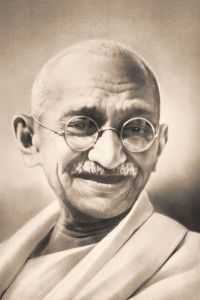
MAHATMA GANDHI

We, at Humans for Change, would very much like to know your opinion on this matter, so go ahead and leave a comment so that we can discuss this with you! 

Acts and Amendments

Motor Vehicles Act, 2019

The new Motor Vehicles act is finally here and we are all for it. The amended bill which was tabled in 2016 has finally been given assent by the President and was brought in force earlier this month. The amendments to this bill have been well written and are quite progressive in nature.

The policy makers have been diligent to keep in check the amount of penalties in consonance with the current time which was not the case a decade ago, for example, a violation of not wearing a seat belt or of not wearing a helmet on a two wheeler resulted in a penalty of 100 rupees before but now the penalty has been bumped up to a 1000 rupees. Other stricter violations such as driving without a license or driving despite disqualification whose penalty had needed to be amended severely have also been raised to 5,000 and 10,000 rupees  respectively.

The bill has seen to do justice to grave offences under certain  provisions like drinking and driving which now has a penalty of 10,000 rupees and/or imprisonment upto 6 months for first time offenders but for second time offenders the fine goes to 15,000 rupees and/or imprisonment up to 2 years. 

One of the primary areas where the bill is said to concentrate on is for developing stricter laws especially for the underage demographic i.e juvenile offences such as driving or drinking and driving which has held the guardian to be liable for a fine of 25,000 rupees with a 3 year jail time and simultaneously leads to cancellation of the Motor Vehicle’s Registration.

It is seen that new expressions and terms have also been included in the amendment,like,terms such as the “golden hour.” 

Golden hour has been designated as that one hour right after the accident takes place which is said to be very critical for the life of the victim.

The act has also encouraged the citizens to give a helping hand to victims of road accidents by providing for the rules of Good Samaritan in the bill which certainly has helped the bill to be protective about the people who volunteer to get involved in the process.

Another expression which has been and was needed to be incorporated is the “aggregator” which is a digital intermediary or marketplace for a passenger to connect with a driver for the purpose of transportation. The set principles of such intermediaries by which they needed to be governed are also included in the bill.

The bill has tried to draw attention to the hazards of climate change thereby also reducing corruption in the transport department by providing for automated fitness testing of the vehicles.The testing agencies issuing automobile approvals have been brought under the ambit of the Act and standards will be set for motor vehicle testing institutes. 

Therefore,it can be concluded that the bill has been amended with a comprehensive approach and to all its entirety. The significant bumps which  were needed to be made in the penalties/fines are believed to encourage people to become less reckless and rather alert while travelling on the road. 

The new definitions and terms which have been introduced are well put but lack a bit of clarity which might hinder the implementation of the amended act,like,the bill has provided for a National Road Safety Board which has to be created by a notification by the central government but it is yet to clarify its functions and its functioning.

But something which needs to be put under heavy observation is that implementation of such fines come through and should not result in people merely bypassing them by paying a meagre amount to the cops which would impede the growth that has been intended with this bill and would defeat the purpose of the amendment.