The purpose of this organisation was clear,it stood for everything that we stood for. Even though our practices involve advocacy and policy,we always strive to raise awareness.
Our Organisation stands for everyone and anybody who wishes to change things.
Our newest campaign has been established for supporting females,essentially Brown Women.
Brown and Female is a Brown Woman Sisterhood with the motto of being Empowered Together. This sisterhood does not possess any cultural barriers among Brown Women throughout the world and encourages them to develop a system of networking to support each other and their own causes whilst providing a platform to do so. The purpose behind Brown and Female is to develop a Brown Women Community worldwide and to deal with their problems whether personal or political,together. To reach out to people in need of help who would understand us better. .
This Sisterhood is for Brown Women of all ages and culture to mix with people alike,for them to know that through this platform they will be able to garner support irrespective of what they are dealing with. The community we hope to build and strive for is a Sisterhood that builds and empowers Brown Women so that our voices cannot be curbed anymore. The agendas of this Sisterhood make up of our own personal struggles we face in our lives almost daily and also with the ones that shackle our race as a whole. The vision for this Sisterhood is simple,it is personal,political and whatever us,Brown Women want it to be.
Brown and Female intends to mobilize The Brown Women Community and provides them with a safe space to voice out their concerns,opinions and rights. Each one of us gets to be the leader and the campaigner in our own cause whilst helping other causes and people. Our Sisterhood would stand for everything that we want to grow it into.
We would request all the Brown Women out their to come together and empower themselves by representing a strong Community.
Brown Women worldwide are welcome to join us in our fight to be counted as equals.
You can join us on our Instagram page with the username brownandfemale.
We, at Humans for Change, constantly strive for becoming well-informed citizens. With tremendous amounts of misinformation, comes uncertainty and lack of awareness. However, we also understand that not everybody has the time or disposition to go through well-researched and articulately written articles in order to understand the various controversies that surround us today. Therefore, with the goal of conscious awareness and rational discussion in mind, we are hereby launching our new campaign: Decoded!
What is this? This is a series of brief and informative articles on various issues, ideologies, and perceptions, to be written in simple layman language for the benefit of our diverse readers.
What is the purpose of this? We wish to promote knowledge, awareness and rational thinking as well as discussion and debate on the various topics that we write on.
When will this be published? The articles will be published once a week, every Tuesday, 5PM IST.
How can we add to the conversation? We actively encourage your feedback and views, and hence appeal to you to engage in discussions in the comments section. We also invite original articles from you, to be emailed at humansforchange@outlook.com.
We are looking forward to your active participation!
Education has never been a priority. While it might have been a priority individually,never a priority as a country.
Why? Because it is an investment which reaps benefits only later. Because those benefits are not apparent and on the face of it. All this while children are judged on the basis of how they perform in school,especially for conservative countries like ours but never has it ever come down to what and how the process has been for it all along.
Schools have always come under the category of one size fits all type of approach. There have been already numerous number of debates which expose those institutions to criticism for the way they structure education. This is not something which is new. But why is this a problem that nobody is solving? Because this is something which does not come under the category of one size fits all. Therefore,reforms in a system which has no one perfect solution to it cannot possibly work out.
What is the downside to not solving it? That education could close up various gaps. Some of our country’s major problems involve population,income inequality,gender wage gap,cultural barriers to name a few. But the point is that investing in its education system would also solve a lot of those problem.
Population: This is something which needs to be paid attention to soon whereas no efforts are taken place to curb it. Basic awareness could solve such a problem,but to no avail. The other aspect of this is that labour resource provided to us is not being used efficiently. How do you use it efficiently? By educating and helping them to garner skills.
Income Inequality: The gap just seems to widen further every year. You solve this one with education as well. It restricts unemployment,one of the prime factors in developing countries and lessens the gap of wealth between individuals. Unemployment in turn also lessens crime. Seems like a win-win.
Gender wage gap:Studies show that women tend to be in less paying industries than men. Equality among genders is still a dream and therefore in many countries like ours which are crippled with conservatism,working women is still a taboo thereby leaving women with almost no education and skills. You’re right,education helps here as well. Education gnaws on those myths and stereotypical values promoting causes such as equality and the whole spectacle behind women are only made for children and maternity.
Cultural barriers: Racism,communalism and all sorts of discriminatory tactics which exist worldwide are something which claw onto you early on. While it is difficult for our older relatives to be “woke”,our present and future generations can help. All of these cultural barriers can be eradicated with awareness. Such rifts and discrimination also causes destabilizing of the country and the economy which certainly does not aid a country’s goal.
Our government needsl0 to pay attention to this untapped investment which with a little bit of nudging can shift the forces of the world.
Comment below whatever you think can also be solved by educating people around you 🙂
India is one of the largest and also the most crowded prison systems in the world, which inherently involves various institutional challenges as well as hardships for its administration. This paper aims to explore the conditions of prisons in India with a special emphasis to reformatory action taken by the legislation as well as the judiciary. While doing so, the historical situation of prisons along with a history of the reforms undertaken is also discussed along with international obligations, jus gentium and jus civile. The paper also throws light on the various challenges as well as the future outlook towards the issue. Ultimately, the proposition for the need to introduce better and improved prison reforms in the country is stressed upon, which will in turn improve the humanitarian situation of the inmates in general.
Introduction
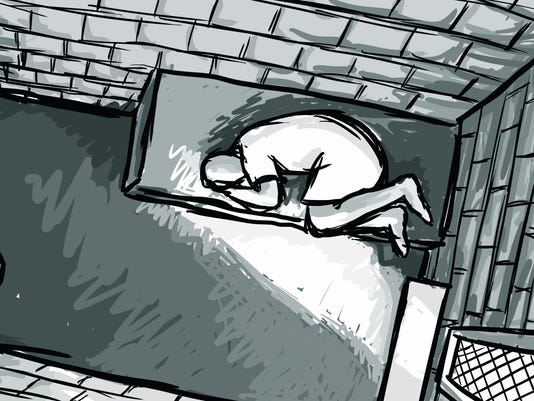
The situation of prisons and the condition of their inmates is an extremely essential issue for the well-functioning of any humanitarian society. The notion that prisons are mere dingy underground cells that house dangerous murderers and should be left at their fate is extremely ill-fitted in today’s world where prisons not only house social deviants who need rehabilitation and our support but also innocent victims of false prosecutions whose cases linger in the court for years but they are not able to secure a bail because of the cognizable nature of the charge against them. Unlike the draconian times, the society needs to realise that the inmates of today need rehabilitation and not torture. They require our support and not hate. Hence, instead of using inhumane correction mechanisms imposed by severe punishment, the modern society today is moving towards constructive development and humanitarian rehabilitation of prisoners.
In India, the National Crime Records Bureau (NCRB), Ministry of Home Affairs, Government of India has given the following definition of a prison:
‘Any place used permanently or temporarily under the general or special orders of a State government for the detention of prisoners, under Section 417 of the Code of Criminal Procedure, 1973 and includes all land and buildings thereto, but does not include: (a) Any place for the confinement of prisoners who are exclusively in the custody of the police, (b) Any place specially appointed by the State government under Section 541 of the Code of Criminal Procedure, 1882 (10 of 1882).’
According to the statistics last published in the year 2015 by the NCRB, there are a total of 1,401 jails in the country, out of which there are 134 central jails and 18 jails exclusively for women as well. It is interesting to note that while the total capacity of these jails is 3,66,781, they anyway house a total of a whopping 4,19,623 prisoners and inmates which is way more than the actual capacity leading to a 15 percent higher occupancy rate than the actually available capacity. It is also worth noting that out of the total inmates (95.7% male and 4.3% females) only 32% are actual convicts and the majority chunk of 67.2% are merely undertrials.
Unfortunately, only a total number of 416 convicts were provided with financial assistance on release and only 1286 convicts were rehabilitated in the year 2015. Moreover, the average earning per inmate was reported to be 4811.4 rupees only in the same year. Hence, these statistics clearly suggest that there is a need for further reform, apart from the reforms which have already been carried out.
In India, the management of prisons falls exclusively under the domain of the state government, as per the seventh schedule of the constitution. In every state, the prison administrative machinery works under the chief of prisons who is a senior ranking IPS officer. Basically, Indian prisons face three long-standing structural constraints: overcrowding, because of the high percentage of undertrial inmates in the prisons, understaffing as well as underfunding. Therefore, the inevitable outcome of the aforementioned problems is more problems including subhuman living conditions, poor hygiene, and violent clashes between the inmates and jail authorities.
The Historical Situations of Prisons and History of Reforms
In the earlier times, the original purpose of prisons was not to confine a person for deterrence from crime or seperate the social deviants from rest of the citizens. The purpose was merely to keep the perpetrator of a crime detained until the actual punishment could be carried out, which was usually in the form of corporal punishment that was intended to cause the guilty person pain, such as being beaten with a whip, or capital punishment which used a variety of methods to claim the lives of condemned individuals.
However, it is interesting to note that the archaeological record of the Indus Civilization has provided no evidence of prisons in any form whatsoever, but then we also don’t have evidence of armies and kings since a more egalitarian system of governance was practiced during that time.
Furthermore, the administration of justice during the vedic period in the territory of the Indian Peninsula was not a prominent duty of the state, and crimes were merely treated as torts. However, there has been no mention of prisons or jails. In fact, the house of the accused served the purpose of a jail and he or she was practically imprisoned in his own house till he or she managed to compensate the plaintiff. Surprisingly, though punishment was considered to be of great social and religious significance since the vedic period and even earlier, the concept of imprisonment as a form of punishment was found to be absent. The Dharmasutras as well as the Dharmashastras rarely mention the word ‘prison’ or ‘jail’ or ‘jailor’ or anything even corresponding to it.
The earliest reference to a regular prison is found in Kautilya’s Arthashastra, in which forced labour in mines amounted to imprisonment and a punishment of one of the severest kinds.
Further, during the course of King Ashoka’s reign, he is said to have maintained in his unreformed early years a prison in which the most fiendish tortures were inflicted, and from which no prisoner came out alive. However, in the later period of his rule, many reformatory measures were taken by him. One measure was that he introduced the concept of regular visits to the prisoners which was to be made by the authorities once a day to enquire about their welfare. Specific emphasis was laid on their health, living condition and work. There were strict rules which were to be followed by the officers of the jail. There was also punishment for those who were charged with ill-treatment of prisoners and violation of rule of law. Also, male and female prisoners were kept in different wards. In the Fifth Rock Edict, the inscriptions of Ashoka, it has been found that grant of amnesty and release of prisoners was also offered on certain auspicious occasions such as the King’s birthday or the night of a full moon.
Subsequently, with the advents of the Mughal Era and even under the Moghul laws, imprisonment was not encouraged. It was mostly just used as a means of detention of the undertrial prisoners inside specific fortresses which were situated in different and remote parts. The qazis were supposed to visit the prisoners, enquire into the conditions and release those who showed signs of repentance. Also, sometimes their release was also ordered on special occasions, for example, as King Akbar so ordered on the birth of his son and Prince Salim.
Even in the Maratha period, the same pattern was followed. However, certain reforms were introduced such as providing them with the opportunity to visit their respective homes for religious rites. They were also released on the ground of health and political prisoners were well treated with respect.
Thereafter, the advent of the East India Company and eventually the British Empire led to the birth of the modern prison administration and brought about various guidelines and regulations. Various Regulating Acts were introduced organisation and systematic approach which also established courts. Basically, the English rule of law was also made applicable to its Indian subjects. The then newly introduced Indian Penal Code defined each and every offence and prescribed punishment for it while the Criminal Procedure Code laid down the procedure for investigation of crime and prosecution of the criminals. Consequently, a movement for prison reforms had also started in Great Britain and effective measures to introduce elements of decency and humane administration were initiated. Before the 19th century, the condition of the prisons was very bad and they remained unventilated, overly crowded and were frequently prone to numerous epidemics. There was no segregation of the youth from the elderly, the convicts from the undertrials and even the female from the male. Unfortunately, the prisoners were treated as slave-labourers and there was no attempt at improving their living conditions and health and hygiene. Moreover, the company was not interested in spending money for the betterment and welfare of the jails. When efforts for reforms were initiated, a Prison Discipline Committee had been formed which submitted suggestive reforms on the lines of cleanliness, provisions of food and clothing and healthcare. Subsequently, the Prisons Act, along with its frequent amended versions, was also passed which mandated various principles and prison management policies. Various administrative reforms were introduced by the Prison’s Act, 1894 which brought about uniformity in prison administration throughout the country. Prisoners under the age of 21 were separated on the basis of puberty. Further, civil prisoners were also separated from criminal prisoners and the undertrials from the convicts as well. The Medical Officer was mandated to visit the prisons daily. The hours of work of those convicted was also limited to nine. The powers of the subordinate staff to inflict punishment were done away with and the Superintendent alone could do so. Then, the Government of India constituted the Indian Jails Committee in April 1919, which led to aiming towards reformation as well as rehabilitation. Its recommendations included categorisation of prisoners, separate courts for children and juveniles including remand homes for housing as well. It also suggested the introduction of warning, probation and fines. However, these recommendations were not implemented well. The government of india act, 1935 resulted in the transfer of the subject of jails to the control of provincial governments, which then implemented certain reforms at the local levels.
After the Independence, the newly constituted Government of India invited the United Nations expert Dr. W.C. Reckless, to undertake a study on prison administration and to suggest policy reform. His report titled ‘Jail Administration in India’ made a plea for transforming jails into reformation centers. He also recommended the revision of outdated jail manuals, after which the government appointed the All India Jail Manual Committee in 1957 to prepare a model prison manual. The committee submitted its report in 1960 and also presented it to the government of India for implementation. The Model Prison Manual (MPM) is the guiding principle on the basis of which the present Indian prison management is governed. In subsequent years, various other committees were set up such as the Mulla Committee and the Krishna Iyer Committee.
*To be continued further in Part – II (Coming Soon)
Rape has been considered to be an act usually committed against one sex and the laws in India certainly tilt towards woman rather than protecting every citizen and gender.
Despite expanding the definition of rape under the Indian Penal Code to include non-penile vaginal acts of penetration, the said definition continues to conform to a gender-specific notion of rape, based on a predetermined characterization of the victim-perpetrator framework on the basis of genders. Implicating a binary notion of gender, this results in gross injustice and it therefore, becomes imperative to adopt a human-rights-based approach in defining the offence of rape, and negate the role of gender in identifying the victims and perpetrators of an act of rape, and establish equity. This argument may be pillared on a state’s obligation to not discriminate on the basis of sex, the recognition of transgender rights, and an assessment of the common grounds for opposing gender neutrality in Indian rape laws.It can be said that crimes against women in India have a lot to do with centuries of patriarchy and a skewed sex ratio. However, the perpetrators often enjoy impunity at the risk of women’s rights and security.
In 2013, one of the most brutal and fatal gang rapes in New Delhi led to not only massive and supremely angry nation-wide protests, but also led to landmark reforms to the existing rape laws. By taking into account the gender and patriarchal attitudes in Indian society, the new laws reform changed the landscape of justice for women by taking a tough stand on crimes against women. In the aftermath of the Nirbhaya gang-rape and death, the Justice Verma Committee was formed in 2013 to review sexual offence laws. As a consequence, Indian women can now file a rape charge online. Cops are duty bound to register a case immediately upon complaint. Rape remains the fourth most common crime against Indian women so these changes were necessary, and critical.To see the crime as merely a man violating a woman, as it currently is currently being seen, however, is an injustice to those whose story does not fit this ambit. There is thus, still a great need for further change to India’s rape laws.
On the same idea, a private members’ bill has been introduced before the Rajya Sabha. This bill would introduce amendments in the criminal laws to make sexual offences gender neutral. Re framed language in sexual offence laws would aim to change ‘any man’ and ‘any woman’ to ‘any person’ – a step forward to make the laws gender neutral. “Men, women, and other genders can be perpetrators and also victims of these offences. Men, women and others need to be protected”.
In understanding the need for this change being pitched, one must first understand what exactly constitutes rape. International law has evolved from viewing it just as penile-vaginal to penile-orifice and then to penetrative-orifice, all within a non-consensual context. By the last legal definition, the physical violation with blunt objects undergone by Nirbhaya at the hands of her gang rapists would be classified as rape.It would by current Indian legal standards as well. Yet, for instance, if there were to be such an act committed by a woman against a man or even another woman, it would not amount to rape. To be sure, it would be an assault-based crime of some form, but not rape. This, even though the victim would have been forcefully penetrated in a sexual manner by her assailants.The same result would also come about if the victim were a child, as the law would allow for a charge of sexual assault, but not one of penetrative sexual assault, which is codified as male-only. Many parliamentarians and some activists argue that only members of one sex can rape and only the other can be raped, for rape is only ever patriarchal. The Indian laws are thus very limited in this regard, bringing to light this shortcoming. Statistically with regards to the existence of both male and female survivors, the US’s Centers for Disease Control in Atlanta has estimated that 18.3% of American women and 1.4% of American men have experienced rape at some point in their lives. Both percentages are likely to be underestimations due to stigma attached to reporting the crime. Ideally, India would be able to provide its own numbers for statistical comparison.
However, given that rape by legal definition cannot be committed against men, there is no good way of determining just how many male survivors exist in India.Considering the argument that equity in a society is cardinal to its good governance, in addition to those discussed above, such a change and broadening of the definition of rape under Indian laws may also be deemed essential. What also need to be considered is that even though women suffer from such crimes in incomparable numbers, the law cannot turn a blind eye to the victims or the perpetrators of other genders.
In conclusion, the impulse to view the rape narrative as exclusively that of a man violating a woman does an injustice to those whose dismal stories and sufferings simply do not fit the mold that is easiest for us to understand and therefore,an imperative need to redefine norms of the society is felt which would help only if the laws are not made to favor any gender rather to determine the acts that constitute this heinous crime which could be committed against any person.
As a law student I am supposed to write about advocacy and policy. While I believe it to be helpful in my professional life,I also believe that my Co-founder and I created this blog for it to help debate and talk about everything that is wrong with our Indian system and society,especially when people claim it to be in the name of religion.
While I contemplated a lot before writing this article and thinking what good will my article do,I remembered the sole reason for us to come together and put together our entire act into an organisation was to stand up for the things that we believe in.
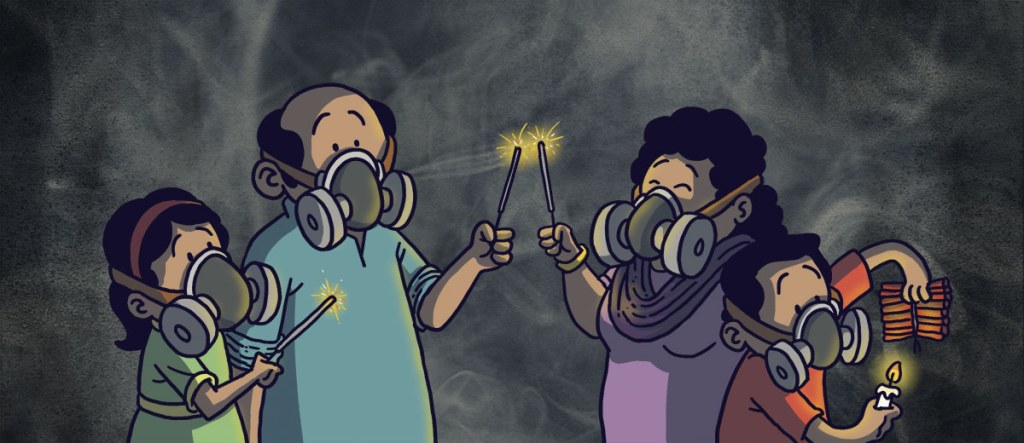
Our festivals of lights,Diwali just passed. This festival used to be my favourite festival since I was a kid but the reason why I loved it the most soon became the reason I have started to hate it. A custom of wearing new clothes,praying to our Gods and then the part I could barely wait for every time this festival arrived,the part where we burnt crackers.
Burning crackers used to be a tradition at my house,everyone used to gather round and celebrate the festival of lights. But the reason why I adored this festival this year became the hazard that I could never fathom for it to be.
Why is this relevant for me to write about?
This is relevant because people across the city of Delhi-NCR have come up with excuses to justify their actions.
Everyone was and is aware that the air breathed in these four cities is deemed to be hazardous. And let me elucidate that anything above 100 appearing on your Air Quality Index that you have been checking out since Diwali to decide whether to step out of the house or to let your child play in the park is considered to be unhealthy.
The justifications that I heard for bursting some of the “green crackers” and a whole lot regular crackers were that it is a custom to burn crackers during Diwali and “oh,why do you no say anything to anyone when they burst crackers during New Years and Christmas.”
Among others there were also some who tried to blame everything else from the public transport system to “What will happen to the manufacturers who produce these crackers?”
Lets answer these questions one by one. Firsty all those people advocating for green crackers and claiming that they cause less harm to the air apparently,are you aware how these crackers are regulated and if they are at all regulated? Let me help you,they aren’t regulated and there is no regulation which is about to be imposed either,and judging by this country’s legislation,please don’t hold your breath.
The ones claiming that Indians burst crackers on New Years and Christmas and why don’t I put out posts blaming those people.
Well,for me this is not shifting of blame but realising that crackers are harming our already severely polluted air and if you’re asking me to blame every American,British et cetera citizen throughout the world,have a good look because their air is not as polluted as ours.
What stunned me the most when people were advocating this argument was how bizarre this argument was and how essentially well law students thought this argument was. This is exactly what we are taught in law school not to do. This is similar to claiming that because the other person committed a crime and got away with it that is essentially why you did it in the first place.
And even after arguing with “these” people that it was not about any other festivals or any other country doing it but about our nation and how we should not do something which would probably put our entire family at risk and worsen the air that we have no choice but to breathe,they still failed to understand anything at all.
To the people who blamed all the stubble burning after Mister Arvind Kejriwal pleaded the farmers to stop seemed a complete way out for them.
PS:The Government also pleaded you not to burst crackers. 🙂
Let me realistically put this problem to a test by saying that that night of Diwali everyone acted like farmers burning stubble at the same time(which is unlikely because every farmer throughout every state is not likely to burn their stubble every day,hence,the pollution that they were causing over some months you caused that in a day) which caused the Air Quality Index to dip down to 600 which is downright hazardous and also made me witness my little brother having problems breathing and vomiting because of the air quality. My brother is ten years old and I am sure that half of the people who burst crackers that night were among the ones who probably have small children around the age of my brother,let me just tell you that the iota of happiness that you gave your child that night by burning crackers that night for “just their sake” is completely not worth the amount of problems that you caused him/her in the long run and it sure as hell is not your right to make other people’s children,people who were careful and considerate and who witnessed their kid having respiratory problems at a very young age.
To everyone who says that that was just one night of fun and relaxation,you all certainly did contribute to something big,dipping the air quality index to 600 and jeopardizing the lives of everyone living in the city,making the cities of Delhi and NCR a worldwide headline for people across the Globe to never want to visit the city.
Something funny that I had seen was the reaction of Indian people over a twitter thread of how Indian people in New Jersey had celebrated Diwali where they left tons of waste on the road. Ironically,Indians living in India were more disgraced with that while being in denial about the massacre of this polluted air that they caused and everyone is breathing today.
This article addresses the pertinent issues of data privacy laws in our country. The only data privacy or data protection laws that are in force in India are by the two acts- Information Technology Act,2000 and Information Technology (Reasonable Security Practices And Procedures And Sensitive Personal Data Or Information) Rules, 2011 which are deemed to be completely inadequate in this day and age.
Legislation
There are two legislations which are supposed to protect the Indian population from their data being exploited and these legislations are certainly and severely backward and incompetent especially within this age where new technology spurs the next moment almost instantaneously.
The Government even though has started to demand biometric for essential public documents such as the Aadhar card,they fail to recognize how loosely encrypted their own websites are which can easily be exploited for the data they store.
The Government further on has introduced a requirement to link Aadhar Cards to be linked with a person’s PAN card which again is a big massacre waiting to happen,as the PAN card is a source which holds all your sensitive data such as your bank account details
.
They have failed to comprehend essentially how incompetent their electronic administration system is and how miserbaly they would fail at an attempt towards digitalization unless they dont regulate the data privacy laws in this country.
Another attempt that they seem to be experimenting on apparently for the safety and security for their own people is with varied facial recognition systems. While the companies dealing with such technology deem it to be essential and are completely ecstatic about such progress,the technology used by these companies is amateurish and does not deal with the problems at hand by providing an apt solution.
It is imperative to understand that the usage of this method does not only depend upon how effective the technology is,it is important to consider that a country which is majorly corruption ridden because of their own public authorities can only be efficaciously used if its disposal is equitable which seems to be the biggest question posed.
For instance one of the methodologies that the Government wishes to adopt is to deploy this technology for the benefit of the Indian Police System.
The Police is often seemed to be an authoritative figure used only as an intimidation tool rather than as a force for the protection of the people.
The Indian police system is deemed to be heavily corrupted and filled with inadequacies such as biases against minorities,brutality against people and is also often criticised for misuse of power,hence,by allowing such a dysfunctional system to take control of such a technology would definitely call for speculation of breaching fundamental rights of people.
It is also unclear as to how this technology is to work as evidence within a court of law and how would especially minorities who make up for 55% of the undertrials in India refute such a system.
The newly emerging E-commerce market.
While the e-commerce markets promotes accessibility,convenience,affordability and healthy competition it also ensures to give a lot of leeway to companies to get away with unfair tactics.
There are several companies which demand data accessibility before letting the user use their services.
While this data is routed to third party companies to customise advertising on your device it also entails abiding by no protection whatsoever and especially in the case of body corporates not registered within India as the aforementioned rules lay down that Indian body corporates are the only ones which need to comply with such rules and regulations laid down.
The newly drafted e-commerce policy of 42 pages has heavily focused on monetizing the data received from within the economy and only a diminutive part of it talked about protecting the rights of individuals. The draft only seemed to acknowledge that it was an individual’s property and did not address the concerns as to how corporations which seem to absorb all this data are intended to be regulated. The policy draft left a lot of questions unanswered as well and seems far away from being the guiding principles that we hoped it would be.
What does the future hold?
As of February,2019 the Government has introduced a policy draft for E-Commerce marketplace and no separate bill has been introduced to regulate data which seems to be poured out to international organisations not concerned with the protection of our data as they have nothing to comply with. India being one of the biggest economies of the world with absolutely no legislation which protects it,a deficient executive system and no current legal remedies to resort to in 2019 has certainly not coped with digitalisation.
The initiatives taken by the Government of digitalising their own websites might seem to save our occasional trips to several public administration offices but does not seem to help us with protecting our privacy rights.
It further seems to be on its way of severe exploitation through bio metric systems which are to be complied with,with the help of every public authority which is feared.
In recent years, carbon dioxide emissions have nearly doubled, sea
levels are rising, ice sheets are shrinking and the planet is getting hotter.
Whether certain leaders of the world believe in climate change or not, it is
something which is undeniably taking place because we can all feel the effects
and repercussions of it, be it the shrinking island of Japan or the ever
reducing number of animal species. Majority of scientists around the globe have
confirmed that human activity is not only an aggravating factor but is also the
cause of most of the climate change. In the present times, a situation of
urgency has arisen after predictions that the Arctic cover will melt in a few
decades. Therefore, it is a vital responsibility for governments as well as the
legal systems to ensure prevention and mitigation by all means.
Unfortunately, in India, environmental laws and rules governing
climate change are not only decades old and outdated but they also fail to
address the urgency of the situation in which we are today. While there is no
scarcity of legislations, ranging from the Environmental (Protection) Act, 1986
to the Water and Air Acts, these rules and regulations majorly fail to be
effective. A major reason for their failure is that the boards and authorities
established under these acts to work as enforcement agencies lack
accountability and implementation. Many a times, giant corporations get away
with causing pollution and offences listed in these acts by paying a few fines
which are only worth a penny for them. Even though India is a signatory to
various environmental resolutions and has also ratified the UN framework
convention on Climate Change in 1993 and the Kyoto Protocol in 2002, there has
still been very less enforcement considering that it’s a dualist nation.
Another major reason is the lack of political will and lack of awareness among
the citizens, which in turn fails to create the much needed political pressure.
The country’s climate policy is also outdated, as the last one was formulated
in 2008, a decade back. The ‘National Action Plan on Climate Change’ which was
then formulated has evidently not been successful as most of the goals listed
therein have not been achieved, such as the integration of climate laws and
reporting of greenhouse gases (GHGs).
Hence, now the need arises for the courts and tribunals to take
all measures for prevention and mitigation, so as to ensure the safety and
well-being of citizens. As Justice D.Y. Chandrachud mentioned in his recent
speech, there is a need for the courts to devise solutions instead of waiting
for the parliament and this is exactly what India needs. It has unquestionably
become an issue of fundamental rights of the people and the right to life
guaranteed by Article 21 of the constitution, so the tribunals must seek to
protect the same. Therefore, in order for the judiciary to eliminate the causes
of climate change, there is a requirement of creative interpretation of laws as
against a strict and literal interpretation which hinders progress and
advancement. Doing this would not only benefit the community but also reiterate
the essence and objective behind the legislation. Therefore, there is a dire
need to interpret all legislation in an environmentally friendly way while
keeping in mind the long-term consequences of such judgments, since it is a
common law jurisdiction and precedents also play an important role.
In order to truly achieve environmental justice, the courts will
have to take up an active role in creative interpretation so as to restrain
harmful corporate projects and practices and also formulate guidelines through
judicial activism. The ‘precautionary’ and ‘polluter pays’ principle along with
the ideals of sustainability must always be kept in mind, so as to protect the
right to life of future generations as well. It is unfortunate that in the case
of Ridhima Pandey v. Union of India [O.A. No. 187/2017], the petition filed in
the National Green Tribunal by a nine year old girl alleging inaction on
climate change by the government based on the doctrine of public trust on
behalf of all children and future generations was recently disposed of as the
court believed that “climate change is covered” in existing laws. It must be
remembered that based on the doctrine of public trust, the state is the trustee
of all natural resources for the benefit of citizens. Furthermore, a severe
adoption of absolute and strict liability principles along with correlating the
measure of compensation to the size of the enterprise will also have to be
adhered to. It is also vital that environmental justice can no longer be
limited to environmental cases and tribunals, and must extend to every decision
ranging from matters of land like the Aarey forests of Maharashtra to
commercial development matters.
Another aspect which affects interpretation is the polarity
between economy and the climate, as unfortunately economic agendas act as
powerful hindering forces for environmentally sound decisions. However, it is
now high time to think about the future stakeholders considering the fact that
a good economy will do no good if most of the population is unable to afford
even clean air.
In conclusion, in order to give way to creative interpretation,
there is a need to learn new meanings of old concepts, take up a proactive role
with a liberal approach for suo-motu powers and also move towards
scientifically driven and sustainable decisions and judgments. If the same does
not materialize, then the citizens of this country would not have a future, let
alone the future generations to come.
In the present times, there is a lot of controversy with regards to the religious rights of women, with special reference to the Sabarimala temple case. As should happen with every controversy, this issue needs to be talked about and discussed in detail in order to formulate a holistic policy on the same, which is beneficial to every stakeholder.
In order to hold successful deliberations on the issue of women’s religious rights, there is a need to focus on numerous aspects apart from the right to enter places of worship and entering temples during the period of menstruation. Since India is indeed a country of diverse religions, the rights thereby originating from these religions are also diverse and manifold. A very important area of focus relates to inheritance and succession rights since they are closely intertwined with religion. The nature of religious freedom that women enjoy, not only on paper but also in practice also needs to be considered. This includes the right to follow, convert as well as not to follow a particular religion. Hence, the laws in relation to conversion also need to be referred for this discussion.
Another very important area that requires focus is exploring women’s right of religion with relation to marriage. While some religious rules prohibit women to practice a different religion than that of the husband, others rules necessitate the conversion of women to the religion of that of the husband in order to hold a successful marriage. This in turn raises a question about the religious identity of a woman in a marriage and the level of independence that she has to choose and practice her choice of customs and celebrations as different from her husband. Interestingly, conversion of a spouse to another religion is also a valid ground for divorce in many cases and what happens is that the woman is left with little or no maintenance just because she chose to follow a different religion or not to practice the religion followed by her husband in the case. Another interesting but disturbing element is that according to certain laws, the religion of a child is always assumed to be of his/her father and not of the mother. Therefore, such aspects are reflective of the patriarchal nature of the institution of religious marriage in India and how it favours the husband over the wife.
Furthermore, there is also a need to focus on the balance between religious rules as well as decisions taken by religious councils and laws and regulations that are not necessarily backed by religion but are nevertheless good for society and good for the cause of promoting religious rights of women. Hence, this involves the much dreaded question of moving forward and distinct from strict religious interpretations of religious rights for the empowerment and advancement of women.
In conclusion, in order to materialize the aforementioned discussion, politicians and other organisations need to build a base for tolerance in the nation and they need to figure out how to do that. There is also a need to eliminate the causes and practices which hinder the religious freedom of women in the country, so that we can truly achieve gender equality in the sphere of religion. Also, as it has repeatedly been suggested by courts, tribunals and law commissions along with the international community itself, the nation also needs to work on the integration and promotion of uniformity in religious laws for the benefit of women and children.
In future, the true ideals of women’s religious rights and freedoms can only be achieved if political parties and leaders come together with other organisations and institutions working for the advancement of women’s rights in order to reach a consensus for the benefit of all women who are the stakeholders in this case.
This article intends to outline the basics of the Indian education system.There is an urgent need to point out the sanctity and importance of the education system in any country but there are certainly several loopholes that you can poke in the Indian education system in this day and age as well. The very grave one being that the same curriculum is taught in schools across the country with the same teaching pedagogy passed over since decades by earlier teachers. Therefore,this article’s purpose is to explore and pinpoint what all needs to be changed in Indian Schools focusing especially on the curriculum taught and the role a school plays in the personal development of a child.
The Indian Education System has been stagnant and outdated for quite some time to say the least and is in desperate need of being redefined. It is imperative to look at the curriculum and how it is taught and,at the same time to take a look at what roles do the teachers play in the daily lives of the kids. Therefore,this article does not intend to delve deep in an analysis of the Education System but intends to draw a wholesome picture of what all needs to be improved.
Curriculum
1)Let’s start with the basics of the Education system in India. There are five education boards in India;
a)CBSE(Central Board of Secondary Education)
b)State Board(Separate board of every state)
c)ICSE/ISC(The Indian Certificate of Secondary Education)
d)IB(International Baccalaureate)
e)Cambridge IGCSE Indian Studies.
While the first three boards provide somewhat the same subjects to be taught and assessed in schools and the curriculum process,the last two boards have been newly introduced for children wanting to pursue higher studies abroad and tend to provide much more flexibility.
The first three boards are the boards which are generally pursued by an Indian child. The curriculum of these boards has not changed much over some time.
The first three boards even though while providing somewhat similar subjects are not assessed in the same manner. Therefore this often leads to marks not being judged on a uniform level and assessment not being made on a generic marking scheme.
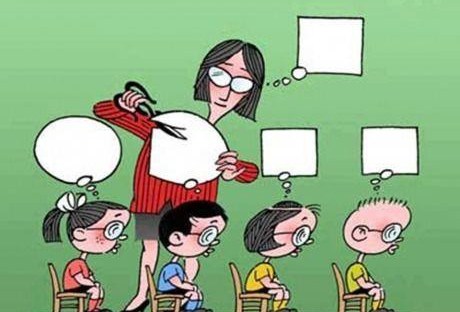
The implementation of the curriculum is often made out to be a practise through rote learning and the ultimate goal for students to score higher marks for the sake of getting into good colleges.
It is imperative to understand that schools play an important role in the overall growth of children. Children generally spend 6-8 hours in their schools while going from class to class they do tend to develop a habit of being in school for the major part of their day but what needs to be paid attention to is for schools to have a dynamic curriculum which is adopted with changing times.
Practical and realistic approach to subjects need to be implemented so as to let the children know how to use such skills or information in the real world and not just to write a test so as to make their report cards look good.
The role of the faculty in the lives of the children
Often Indian teachers themselves are not equipped to handle the developments and changes that a child goes through while his/her entire school life. They tend to take their part in the child’s life as a casualty rather than of immense influence that it tends to be.
To take an example let’s take one of every grumpy teacher that we all have had at least once in our school life and especially in our primary classes. They might shame a child who has not done his/her homework or if they answered a question wrong in front of the whole class rather than to understand why he/she did not do his homework or is not interested in the subject or to try and make him/her understand the subject again. This is a common practise resorted to by teachers which they take lightly and don’t understand the repercussions of. The child,even if had tried to understand the subject harder after being shamed might not try at all and avoid the teacher altogether to face that kind of persecution again.
Subjects like drug awareness or sex education are considered to be a taboo in the Indian societies till date. While there might be people supporting the cause on social media,there needs to be something done at the very root level to normalize subjects like these or to make children more aware of the harm that drugs can cause them. Since teachers tend to dismiss the children that their moral compass doesn’t agree with they form an opinion and end up sticking to it rather than helping the child through the transition.
Our Indian society is majorly to blame for it because we have the tendency to shush or judge whatever we think might be morally wrong and teachers are certainly a part of that same Indian society.
Indian schools lack the very thing which students might need the most when going through a difficult time at home or school which are counsellors. While our teachers might be good at giving professional advice or on how to get into a good college but they certainly lack the sensitivity or the maturity which is needed to be dealt with a couple of teenagers.
Ps: Stay tuned,a second part to this article will be updated soon 🙂





 Humans for Change