
Abstract
India is one of the largest and also the most crowded prison systems in the world, which inherently involves various institutional challenges as well as hardships for its administration. This paper aims to explore the conditions of prisons in India with a special emphasis to reformatory action taken by the legislation as well as the judiciary. While doing so, the historical situation of prisons along with a history of the reforms undertaken is also discussed along with international obligations, jus gentium and jus civile. The paper also throws light on the various challenges as well as the future outlook towards the issue. Ultimately, the proposition for the need to introduce better and improved prison reforms in the country is stressed upon, which will in turn improve the humanitarian situation of the inmates in general.
Introduction
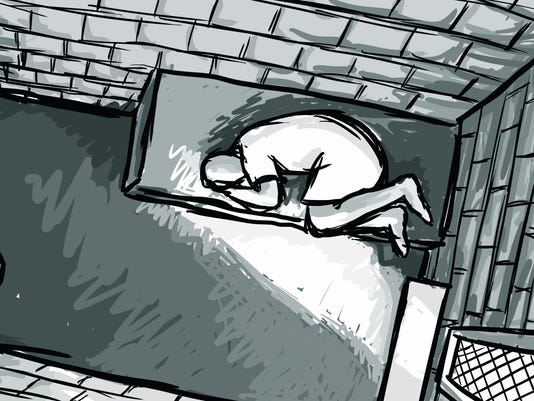
The situation of prisons and the condition of their inmates is an extremely essential issue for the well-functioning of any humanitarian society. The notion that prisons are mere dingy underground cells that house dangerous murderers and should be left at their fate is extremely ill-fitted in today’s world where prisons not only house social deviants who need rehabilitation and our support but also innocent victims of false prosecutions whose cases linger in the court for years but they are not able to secure a bail because of the cognizable nature of the charge against them. Unlike the draconian times, the society needs to realise that the inmates of today need rehabilitation and not torture. They require our support and not hate. Hence, instead of using inhumane correction mechanisms imposed by severe punishment, the modern society today is moving towards constructive development and humanitarian rehabilitation of prisoners.
In India, the National Crime Records Bureau (NCRB), Ministry of Home Affairs, Government of India has given the following definition of a prison:
‘Any place used permanently or temporarily under the general or special orders of a State government for the detention of prisoners, under Section 417 of the Code of Criminal Procedure, 1973 and includes all land and buildings thereto, but does not include: (a) Any place for the confinement of prisoners who are exclusively in the custody of the police, (b) Any place specially appointed by the State government under Section 541 of the Code of Criminal Procedure, 1882 (10 of 1882).’
According to the statistics last published in the year 2015 by the NCRB, there are a total of 1,401 jails in the country, out of which there are 134 central jails and 18 jails exclusively for women as well. It is interesting to note that while the total capacity of these jails is 3,66,781, they anyway house a total of a whopping 4,19,623 prisoners and inmates which is way more than the actual capacity leading to a 15 percent higher occupancy rate than the actually available capacity. It is also worth noting that out of the total inmates (95.7% male and 4.3% females) only 32% are actual convicts and the majority chunk of 67.2% are merely undertrials.
Unfortunately, only a total number of 416 convicts were provided with financial assistance on release and only 1286 convicts were rehabilitated in the year 2015. Moreover, the average earning per inmate was reported to be 4811.4 rupees only in the same year. Hence, these statistics clearly suggest that there is a need for further reform, apart from the reforms which have already been carried out.
In India, the management of prisons falls exclusively under the domain of the state government, as per the seventh schedule of the constitution. In every state, the prison administrative machinery works under the chief of prisons who is a senior ranking IPS officer. Basically, Indian prisons face three long-standing structural constraints: overcrowding, because of the high percentage of undertrial inmates in the prisons, understaffing as well as underfunding. Therefore, the inevitable outcome of the aforementioned problems is more problems including subhuman living conditions, poor hygiene, and violent clashes between the inmates and jail authorities.
The Historical Situations of Prisons and History of Reforms
In the earlier times, the original purpose of prisons was not to confine a person for deterrence from crime or seperate the social deviants from rest of the citizens. The purpose was merely to keep the perpetrator of a crime detained until the actual punishment could be carried out, which was usually in the form of corporal punishment that was intended to cause the guilty person pain, such as being beaten with a whip, or capital punishment which used a variety of methods to claim the lives of condemned individuals.
However, it is interesting to note that the archaeological record of the Indus Civilization has provided no evidence of prisons in any form whatsoever, but then we also don’t have evidence of armies and kings since a more egalitarian system of governance was practiced during that time.
Furthermore, the administration of justice during the vedic period in the territory of the Indian Peninsula was not a prominent duty of the state, and crimes were merely treated as torts. However, there has been no mention of prisons or jails. In fact, the house of the accused served the purpose of a jail and he or she was practically imprisoned in his own house till he or she managed to compensate the plaintiff. Surprisingly, though punishment was considered to be of great social and religious significance since the vedic period and even earlier, the concept of imprisonment as a form of punishment was found to be absent. The Dharmasutras as well as the Dharmashastras rarely mention the word ‘prison’ or ‘jail’ or ‘jailor’ or anything even corresponding to it.
The earliest reference to a regular prison is found in Kautilya’s Arthashastra, in which forced labour in mines amounted to imprisonment and a punishment of one of the severest kinds.
Further, during the course of King Ashoka’s reign, he is said to have maintained in his unreformed early years a prison in which the most fiendish tortures were inflicted, and from which no prisoner came out alive. However, in the later period of his rule, many reformatory measures were taken by him. One measure was that he introduced the concept of regular visits to the prisoners which was to be made by the authorities once a day to enquire about their welfare. Specific emphasis was laid on their health, living condition and work. There were strict rules which were to be followed by the officers of the jail. There was also punishment for those who were charged with ill-treatment of prisoners and violation of rule of law. Also, male and female prisoners were kept in different wards. In the Fifth Rock Edict, the inscriptions of Ashoka, it has been found that grant of amnesty and release of prisoners was also offered on certain auspicious occasions such as the King’s birthday or the night of a full moon.
Subsequently, with the advents of the Mughal Era and even under the Moghul laws, imprisonment was not encouraged. It was mostly just used as a means of detention of the undertrial prisoners inside specific fortresses which were situated in different and remote parts. The qazis were supposed to visit the prisoners, enquire into the conditions and release those who showed signs of repentance. Also, sometimes their release was also ordered on special occasions, for example, as King Akbar so ordered on the birth of his son and Prince Salim.
Even in the Maratha period, the same pattern was followed. However, certain reforms were introduced such as providing them with the opportunity to visit their respective homes for religious rites. They were also released on the ground of health and political prisoners were well treated with respect.
Thereafter, the advent of the East India Company and eventually the British Empire led to the birth of the modern prison administration and brought about various guidelines and regulations. Various Regulating Acts were introduced organisation and systematic approach which also established courts. Basically, the English rule of law was also made applicable to its Indian subjects. The then newly introduced Indian Penal Code defined each and every offence and prescribed punishment for it while the Criminal Procedure Code laid down the procedure for investigation of crime and prosecution of the criminals. Consequently, a movement for prison reforms had also started in Great Britain and effective measures to introduce elements of decency and humane administration were initiated. Before the 19th century, the condition of the prisons was very bad and they remained unventilated, overly crowded and were frequently prone to numerous epidemics. There was no segregation of the youth from the elderly, the convicts from the undertrials and even the female from the male. Unfortunately, the prisoners were treated as slave-labourers and there was no attempt at improving their living conditions and health and hygiene. Moreover, the company was not interested in spending money for the betterment and welfare of the jails. When efforts for reforms were initiated, a Prison Discipline Committee had been formed which submitted suggestive reforms on the lines of cleanliness, provisions of food and clothing and healthcare. Subsequently, the Prisons Act, along with its frequent amended versions, was also passed which mandated various principles and prison management policies. Various administrative reforms were introduced by the Prison’s Act, 1894 which brought about uniformity in prison administration throughout the country. Prisoners under the age of 21 were separated on the basis of puberty. Further, civil prisoners were also separated from criminal prisoners and the undertrials from the convicts as well. The Medical Officer was mandated to visit the prisons daily. The hours of work of those convicted was also limited to nine. The powers of the subordinate staff to inflict punishment were done away with and the Superintendent alone could do so. Then, the Government of India constituted the Indian Jails Committee in April 1919, which led to aiming towards reformation as well as rehabilitation. Its recommendations included categorisation of prisoners, separate courts for children and juveniles including remand homes for housing as well. It also suggested the introduction of warning, probation and fines. However, these recommendations were not implemented well. The government of india act, 1935 resulted in the transfer of the subject of jails to the control of provincial governments, which then implemented certain reforms at the local levels.
After the Independence, the newly constituted Government of India invited the United Nations expert Dr. W.C. Reckless, to undertake a study on prison administration and to suggest policy reform. His report titled ‘Jail Administration in India’ made a plea for transforming jails into reformation centers. He also recommended the revision of outdated jail manuals, after which the government appointed the All India Jail Manual Committee in 1957 to prepare a model prison manual. The committee submitted its report in 1960 and also presented it to the government of India for implementation. The Model Prison Manual (MPM) is the guiding principle on the basis of which the present Indian prison management is governed. In subsequent years, various other committees were set up such as the Mulla Committee and the Krishna Iyer Committee.
*To be continued further in Part – II (Coming Soon)

 Humans for Change