
Opinion, Policy

Future of Religious Rights of Women

In the present times, there is a lot of controversy with regards to the religious rights of women, with special reference to the Sabarimala temple case. As should happen with every controversy, this issue needs to be talked about and discussed in detail in order to formulate a holistic policy on the same, which is beneficial to every stakeholder. 

In order to hold successful deliberations on the issue of women’s religious rights, there is a need to focus on numerous aspects apart from the right to enter places of worship and entering temples during the period of menstruation. Since India is indeed a country of diverse religions, the rights thereby originating from these religions are also diverse and manifold. A very important area of focus relates to inheritance and succession rights since they are closely intertwined with religion. The nature of religious freedom that women enjoy, not only on paper but also in practice also needs to be considered. This includes the right to follow, convert as well as not to follow a particular religion. Hence, the laws in relation to conversion also need to be referred for this discussion. 

Another very important area that requires focus is exploring women’s right of religion with relation to marriage. While some religious rules prohibit women to practice a different religion than that of the husband, others rules necessitate the conversion of women to the religion of that of the husband in order to hold a successful marriage. This in turn raises a question about the religious identity of a woman in a marriage and the level of independence that she has to choose and practice her choice of customs and celebrations as different from her husband. Interestingly, conversion of a spouse to another religion is also a valid ground for divorce in many cases and what happens is that the woman is left with little or no maintenance just because she chose to follow a different religion or not to practice the religion followed by her husband in the case. Another interesting but disturbing element is that according to certain laws, the religion of a child is always assumed to be of his/her father and not of the mother. Therefore, such aspects are reflective of the patriarchal nature of the institution of religious marriage in India and how it favours the husband over the wife. 

Furthermore, there is also a need to focus on the balance between religious rules as well as decisions taken by religious councils and laws and regulations that are not necessarily backed by religion but are nevertheless good for society and good for the cause of promoting religious rights of women. Hence, this involves the much dreaded question of moving forward and distinct from strict religious interpretations of religious rights for the empowerment and advancement of women.  

In conclusion, in order to materialize the aforementioned discussion, politicians and other organisations need to build a base for tolerance in the nation and they need to figure out how to do that. There is also a need to eliminate the causes and practices which hinder the religious freedom of women in the country, so that we can truly achieve gender equality in the sphere of religion. Also, as it has repeatedly been suggested by courts, tribunals and law commissions along with the international community itself, the nation also needs to work on the integration and promotion of uniformity in religious laws for the benefit of women and children. 

In future, the true ideals of women’s religious rights and freedoms can only be achieved if political parties and leaders come together with other organisations and institutions working for the advancement of women’s rights in order to reach a consensus for the benefit of all women who are the stakeholders in this case. 

Opinion

Sedition – A Slippery Slope

It was in 1891, during the times of immense struggle and hardship, when for the first time an Indian subject was charged with the draconian law of sedition. Jogendra Chandra Bose, the editor of a newspaper was pulled up by the then colonial government for criticising a bill introduced by the British Crown. Undeniably, this authoritarian law was used as an instrument to ingrain fear and terror in the minds of subjects and keep a tight rein on the activities of freedom fighters in order to further the British dominance agenda. 

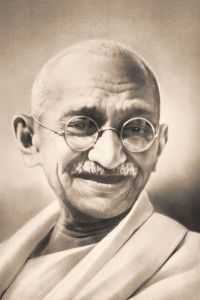
It is pertinent to note that the persons who were charged with this law during the pre-independence era are still remembered and celebrated today as the spirited freedom fighters who were not afraid of rising against injustice and dominance. In fact, Bal Gangadhar Tilak was charged by the offence twice and spent a total of six years of imprisonment for his articles in the Kesari. Believe it or not, but Mahatma Gandhi himself was also charged with this tyrannical crime. In 1922, Gandhi was taken to court for his articles of criticism in Young India magazine where he was extremely aversive to the idea of this law, and strongly denounced it by observing the following: “Section 124A under which I am happily charged, is perhaps the prince among the political sections of the IPC designed to suppress the liberty of the citizen.”

It is quite unfortunate that even decades after India gained independence, this illiberal law not only continues to exist but also thrives. In the recent times, we have seen some of the most absurd cases of sedition. The owner of a school got arrested for displaying a wrong map of Jammu and Kashmir, Divya Ramya got charged for it for tweeting that “Pakistan is not hell. People there are like us,” while the JNU row is a whole other story. Surprisingly, ABVP (Akhil Bharatiya Vidyarthi Parishad), the student wing of the BJP, even went ahead and filed an FIR for sedition against Amnesty International, a world renowned human rights organisation which has done immense work to promote the rights of the Indian citizens. 

Another term which is doing the rounds is ‘anti-national’ which is repeatedly used to describe the persons charged with this law. Unfortunately, what the many users of this term are forgetting is the fact that there is a clear difference between being critical of the government and being against the nation. There is a dire need to understand that criticism is the biggest virtue which leads the nation into progress and advancement. Perhaps the remedy for the excessive and unrestrained usage of this expression may be another term called ‘tolerance’ and the much useful practice of ‘agreeing to disagree.’ 

An extremely important question that now arises, nearly a century and a few decades after the introduction of this law, is that what is the need of this law in the present times and why has it still not been repealed? Ironically, recent actions of the government with regards to Article 370 of the constitution indicate that the Modi regime is much keen on repealing ages old laws which seemingly have no requirement in today’s “new” India. It is indeed a perplexing situation in which one wonders why the statistics suggest a rampant increase in cases of sedition in the last few years. The joke that is going around is that in India, you can get arrested for liking a facebook post and even writing a blog (Hey there, CBI).

Interestingly, the makers of the constitution of India discussed the issue of sedition at length and various debates were carried out after which the word was dropped. However, it still remained a part of the Indian Penal Code which was originally drafted by the British. The law was opposed by the majority of the leaders of the newly independent Indian state as also many of them had suffered imprisonment under the same law by the British. Jawaharlal Nehru, India’s first Prime Minister, went on to say the following:  “Take again Section 124-A of the Indian Penal Code. Now so far as I am concerned that particular Section is highly objectionable and obnoxious and it should have no place both for practical and historical reasons, if you like, in any body of laws that we might pass. The sooner we get rid of it the better.” However, unfortunately, it still remains as a tool in the hands of the government which is repeatedly used to shut down voices of criticism and freedom while various other countries including the United Kingdom have already done away with it. 

Today, the law is misused to exercise blatant abuse of power and is a bane for the freedom of expression of the citizens. Once charged with it, the accused loses his passport, is labelled and mocked by society and has to bear the high cost of litigation to defend himself.

I consider it a privilege, therefore, to be charged under that section.

MAHATMA GANDHI

We, at Humans for Change, would very much like to know your opinion on this matter, so go ahead and leave a comment so that we can discuss this with you!